
Avoid these mistakes that many tourists make at Lake Bohinj.
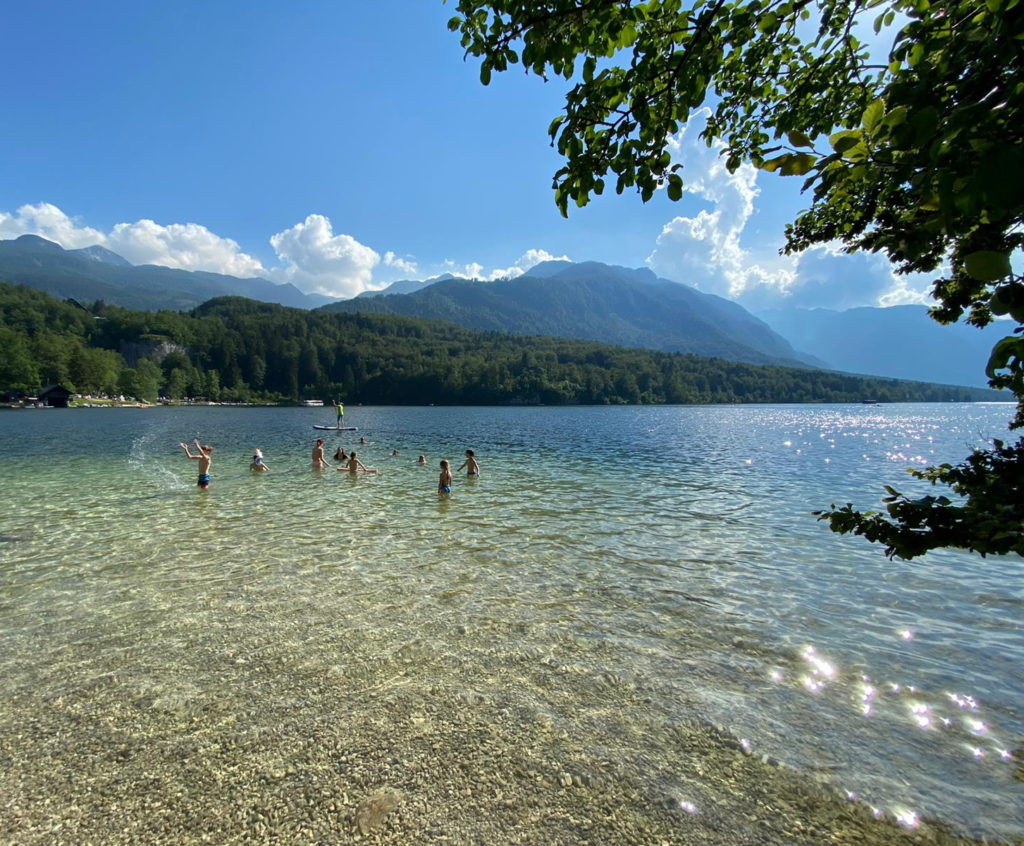
Because Lake Bohinj is one of my favourite places in Slovenia, I return there often. Living in Ljubljana means I can visit in every season, and over the years I’ve noticed the same small mistakes many visitors make once they reach the lake. I also know a few quiet spots that most travellers walk right past without ever realizing they exist.
So here are the 7 mistakes to avoid when visiting Lake Bohinj. These very practical tips will help you experience this magnificent Slovenian lake in much better conditions.
Don’t waste your time at the Savica waterfall
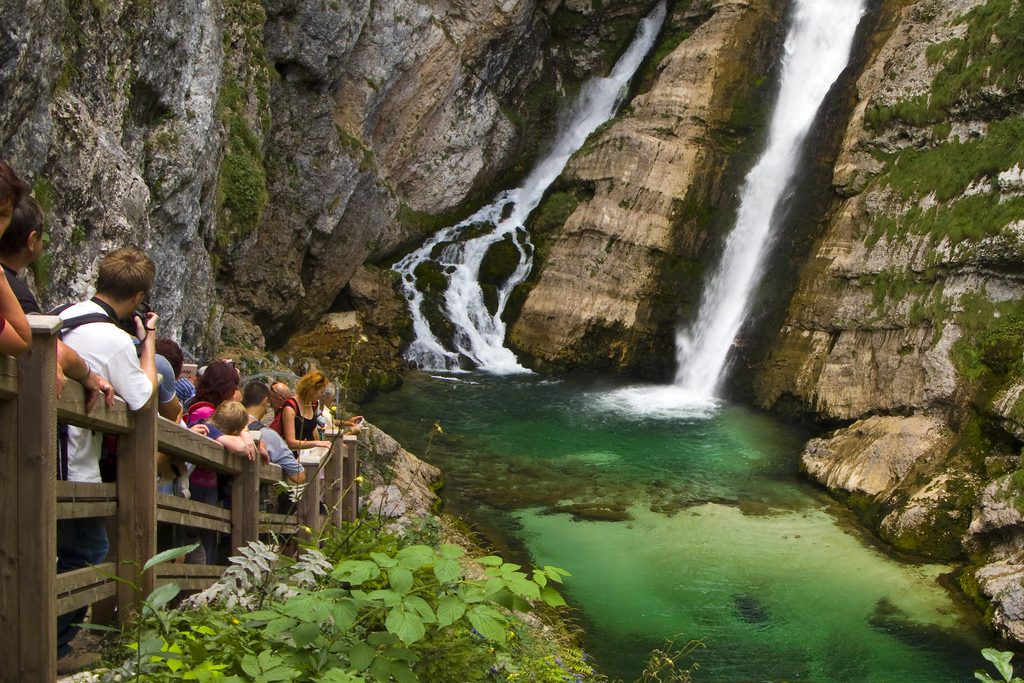
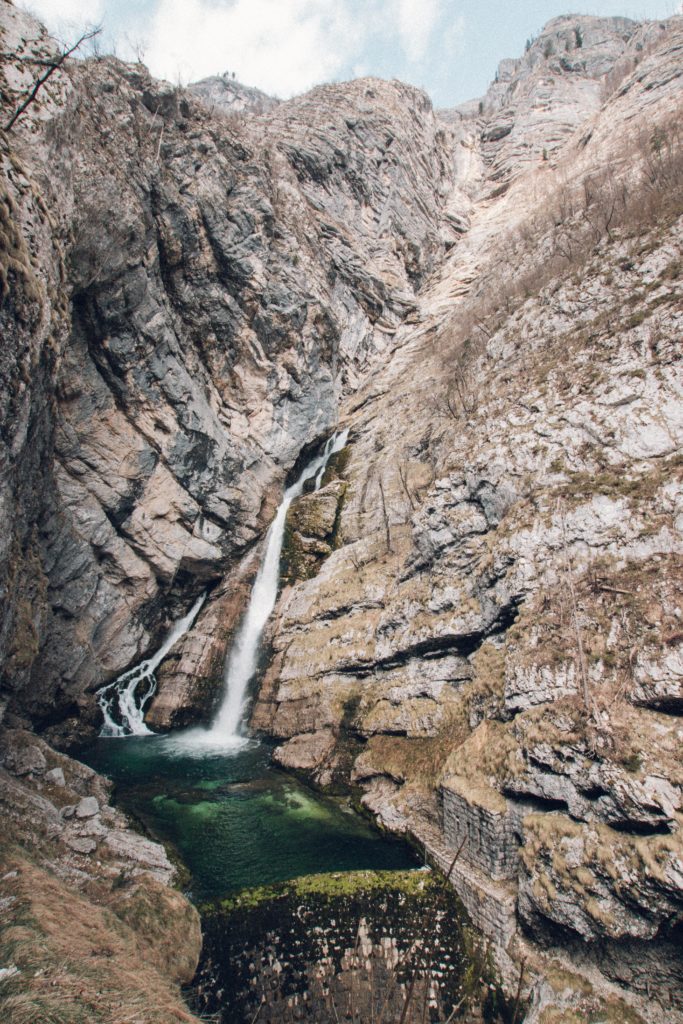
What should you do when visiting Bohinj? The local tourist office systematically directs visitors to the Savica waterfall. For a long time, I wondered why, because it is far from being the most impressive waterfall in Slovenia.
The explanation is actually quite simple: visitors have to pay to access it, and the waterfall is located at the far end of Lake Bohinj. Sending tourists there also helps spread the crowds and prevents the entrance to the lake from becoming too congested.
A waterfall that is often crowded in summer and of little interest

My advice: Save yourself the climb, the expense of paying for tickets (€3 for an adult ticket) and the 456 steps to get there… Don’t crowd in with the other tourists at the foot of the waterfall.
To see a beautiful waterfall in Slovenia, go to
- The two fabulous Pericnik waterfalls,
- The gigantic Boka (Soca valley)
- The Kozjak waterfall, the star of Instagram
- The adventurous Gozd Martuljek waterfall
Don’t visit Lake Bohinj in just a few hours
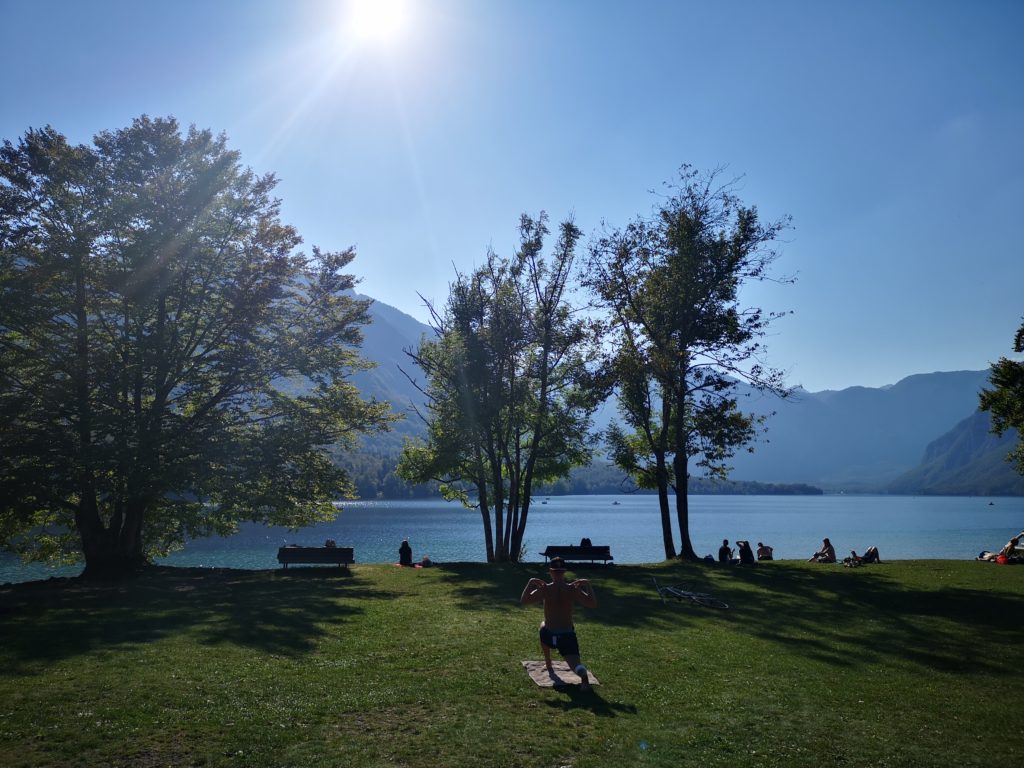
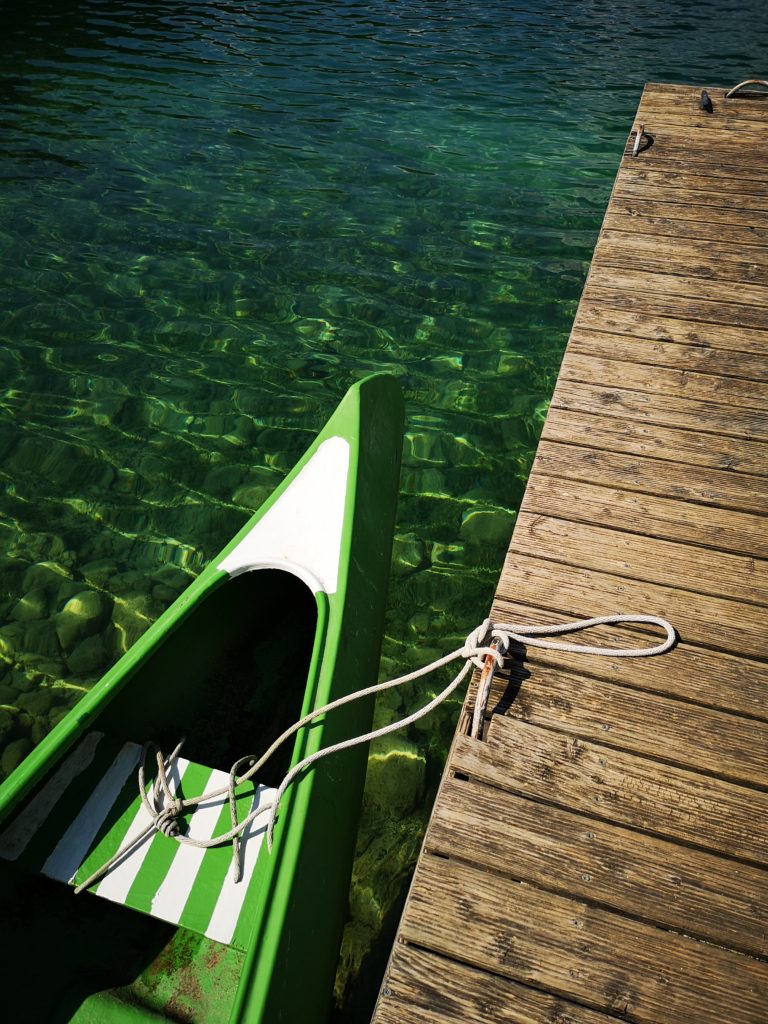
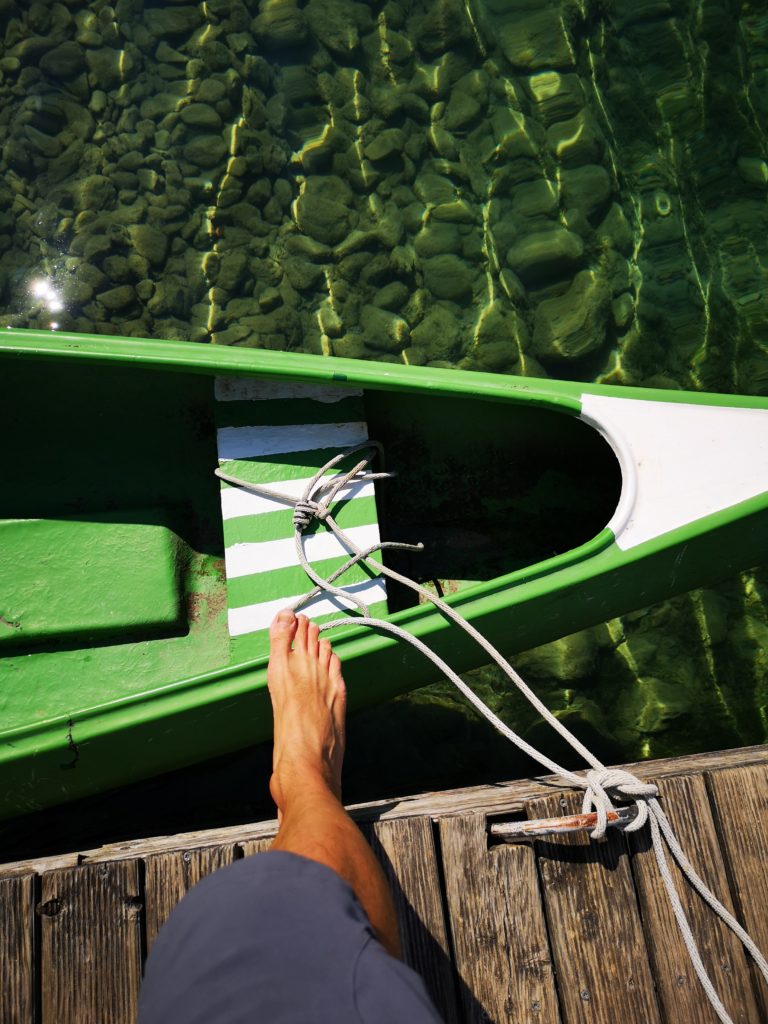
As they are only 26 km apart, many tourists combine a visit to Lake Bled and Lake Bohinj in the same day. If you’re only spending a few days in Slovenia, this is a good solution (get up very early as you won’t have enough time to explore both lakes during the day), but if your holiday lasts a week or more, I’d advise you to spend at least one full day at Lake Bohinj.
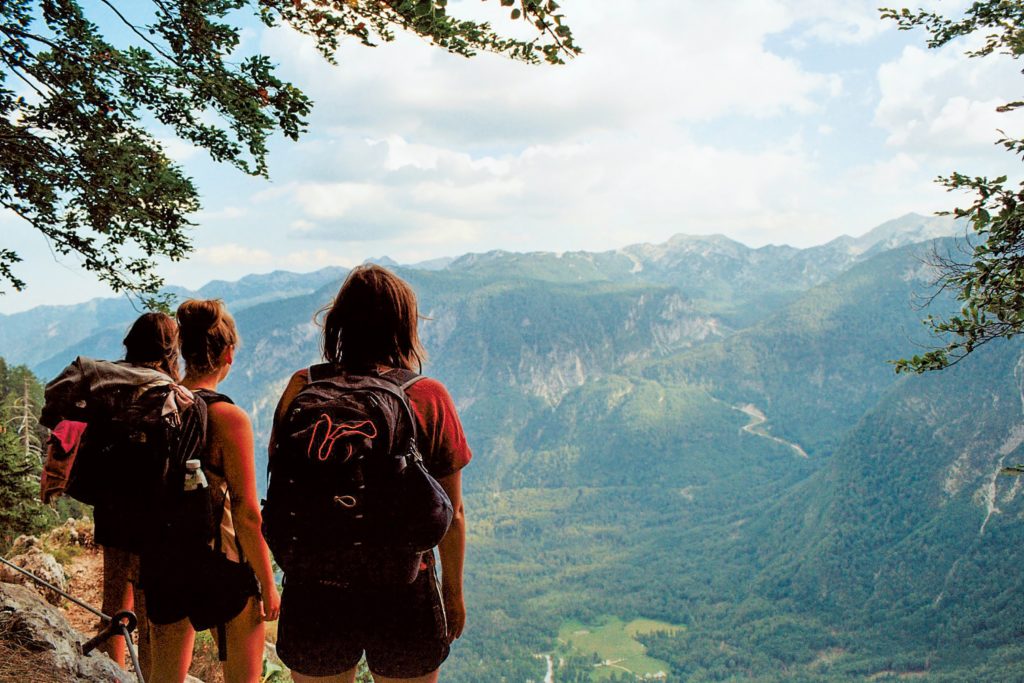
3 days at Lake Bohinj – never a dull moment!
Between the swimming, the walks/hiking, the viewpoints, the cafés and all the sporting activities on offer, there’s no way to get bored in the Lake Bohinj region.
Don’t arrive at Lake Bohinj in the afternoon in summer
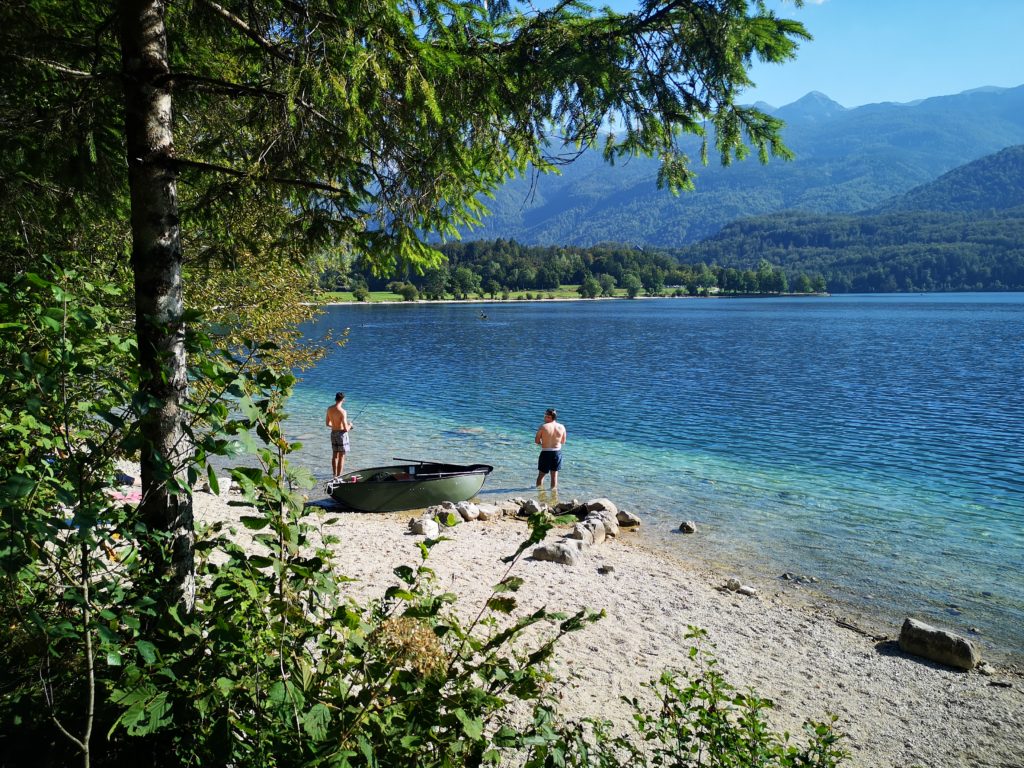
In summer, if you arrive by car at the lake in the early afternoon, all the parking spaces will already be taken (there are relatively few around the lake) and these car parks are rather expensive at the lakeside. If you’re staying for the day, it’s best to opt for the P.R. at Bohinjska Bistrica.
In July and August, arrive at the lake in the morning if possible!
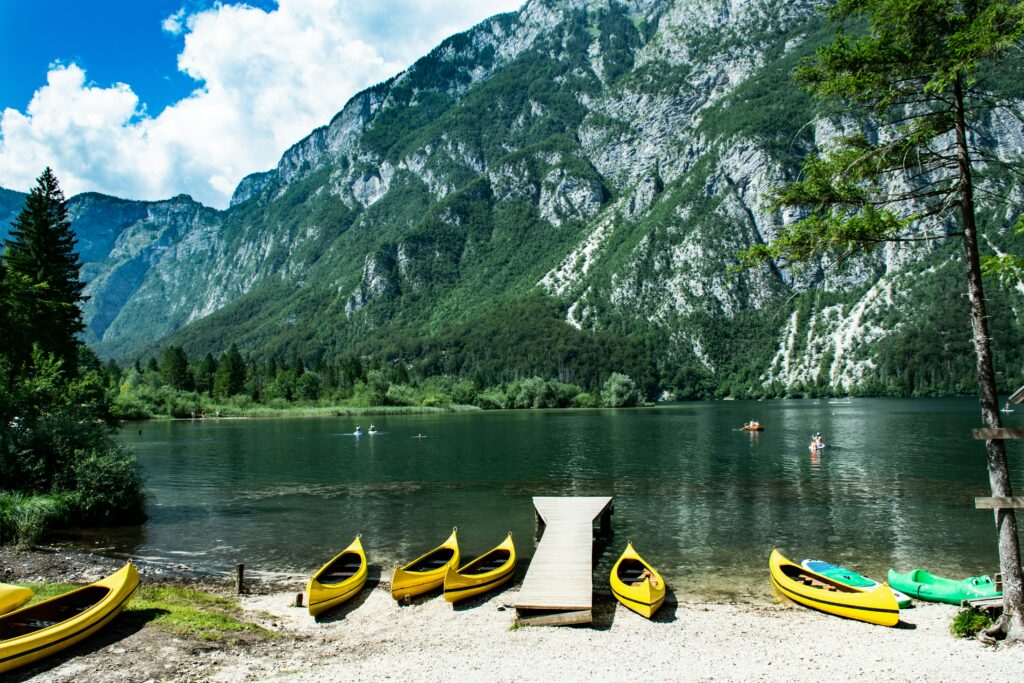
During the summer months, it’s best to arrive fairly early in the morning and spend the whole day at the lake (but not too early either – you’ll understand why later). If you arrive in the afternoon, or if you don’t want to pay too much for parking, follow the advice below.
Tip: Park for €5 in the village of Bohinjska Bistrica and take the beautiful cycle path to the lake, or take the bus from Bohinjska Bistrica (parking is also cheaper – see here for details). The map and car park prices are here. Check it before you come.
Avoid driving to Lake Bohinj on summer weekends
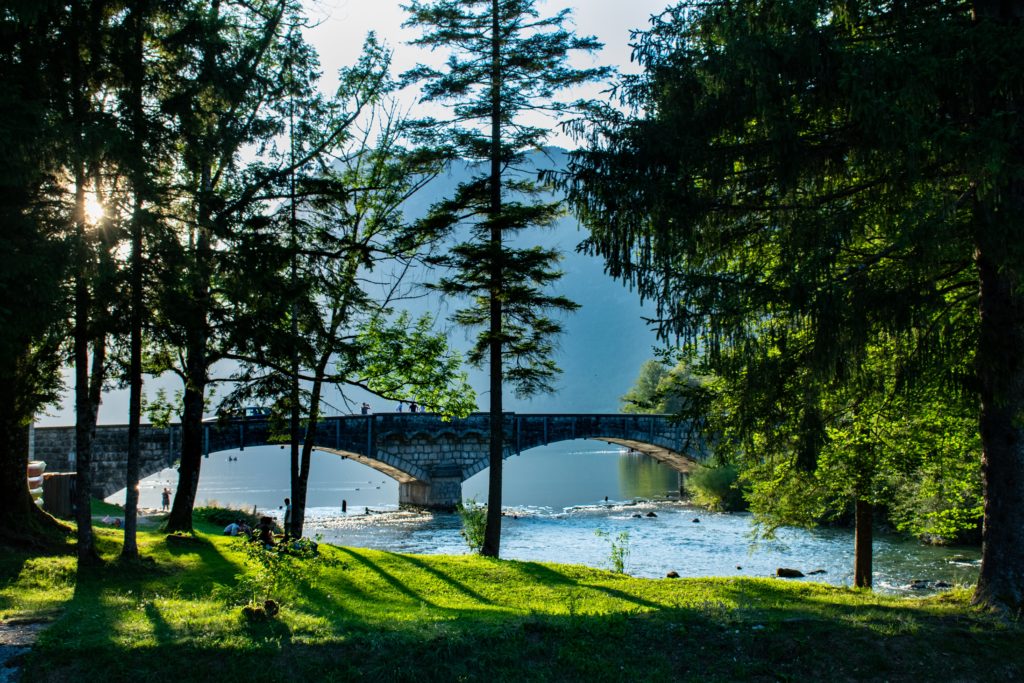
In July and August, Lake Bohinj becomes one of the most popular destinations in the Slovenian Alps. As visitor numbers increase every year, the infrastructure around the lake struggles to keep up during the peak of the summer season. To preserve the wild character of Bohinj and prevent the shoreline from being overwhelmed by cars, the car parks closest to the lake cost €3 per hour in July and August and are limited to a maximum stay of two hours. A much better option is to park upstream in Bohinjska Bistrica, where parking costs about €2 per day and where you can take the shuttle bus to the lake.
The following geographical information will give you a better idea of the problem in summer: this magnificent lake is in a cul de sac, at the end of a valley, with only one road leading to it.
Warning: Don’t park anywhere near the lake – you risk a €50 fine.
If the weather is extremely hot, there is likely to be a traffic jam on the way to Lake Bohinj
On summer weekends, as more and more Slovenians join the tourists, traffic jams often form on the small road that connects Lake Bled to Lake Bohinj. The valley is narrow and the road is not designed for such heavy traffic, which means the situation can quickly become frustrating. As a simple rule of thumb, if the temperature in Ljubljana is above 30°C on a Saturday or Sunday in July or August, it’s probably not the best idea to drive to the lake around 11 a.m.
There is, however, a very simple solution that many visitors overlook. You can take the train to Bohinjska Bistrica — a pleasant journey of about 1 hour and 50 minutes from Ljubljana, or only 25 minutes from the Bled Jezero station. From there, a beautiful 5-kilometre cycling path follows the valley and leads gently to Lake Bohinj, making the arrival much more enjoyable than sitting in traffic.
Don’t cycle around Lake Bohinj (do this instead)
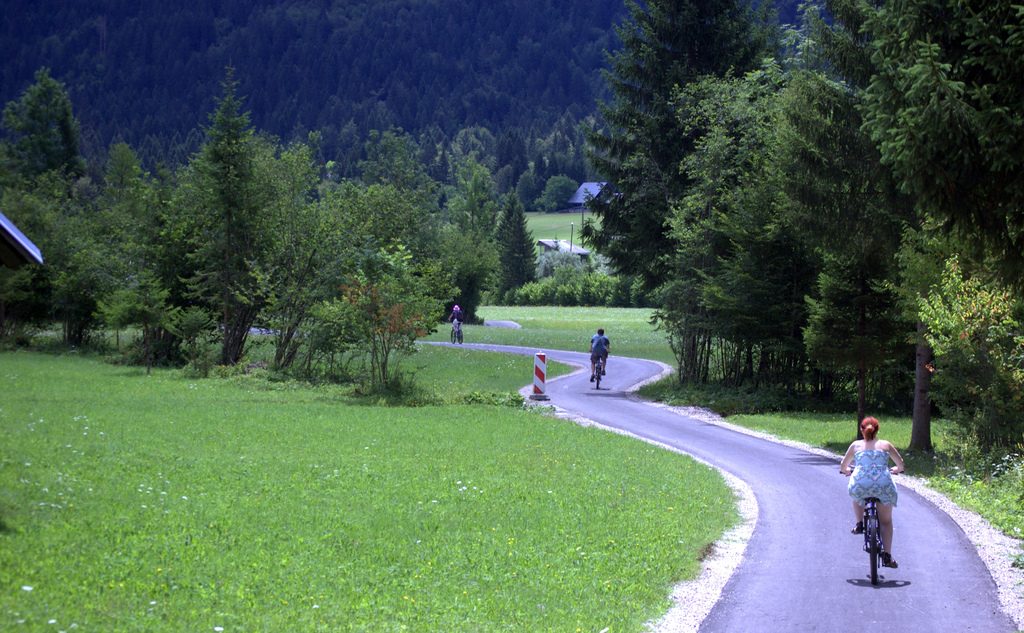
Cycling around Lake Bohinj? Not a good idea! Not only is the southern shore a small, busy road, but the north-western shore, after the village of Ukanc, is a narrow footpath that is off-limits to bikes.
Tip: Walk half way round the lake along the north shore!
Here’s what to do when you get to Lake Bohinj
Go to the village of Ukanc by electric boat or by bus (a good idea as it’s much cheaper than the boat) and then set off on a hike along the north shore. Make sure you have good shoes beforehand. I’ve created the maps below to help you find your way around.
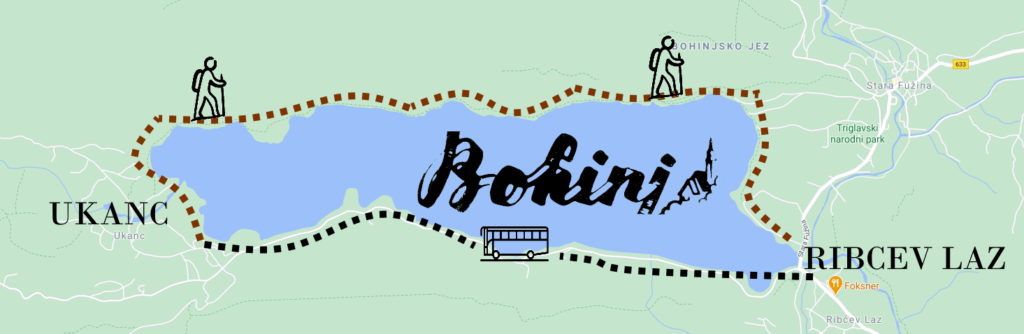
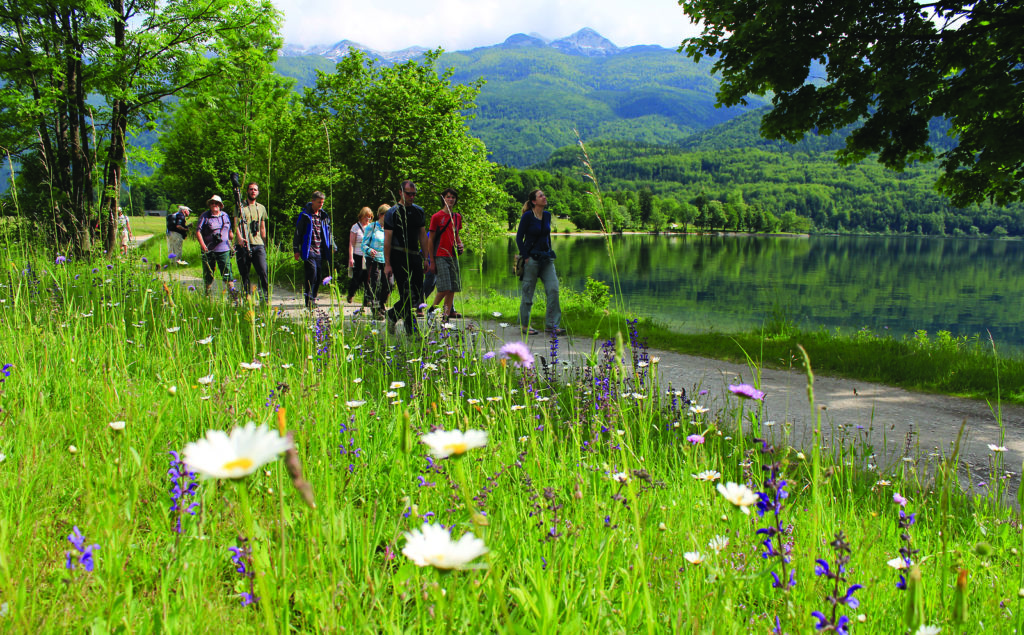
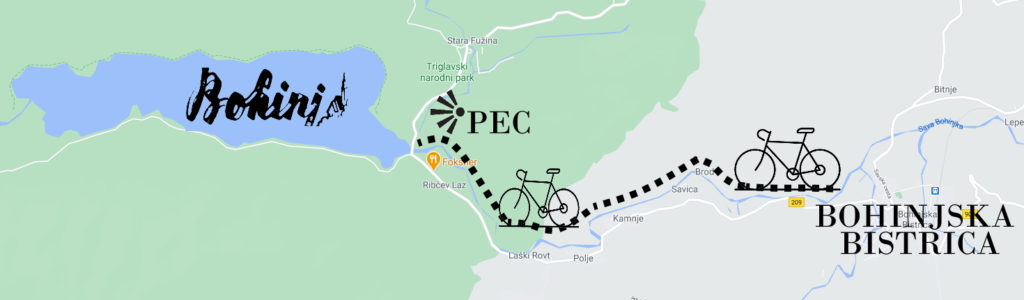
You’ll also find all the directions for a beautiful cycle path beside the lake in the rest of the article (it’s the path you saw in the image at the top of the paragraph).
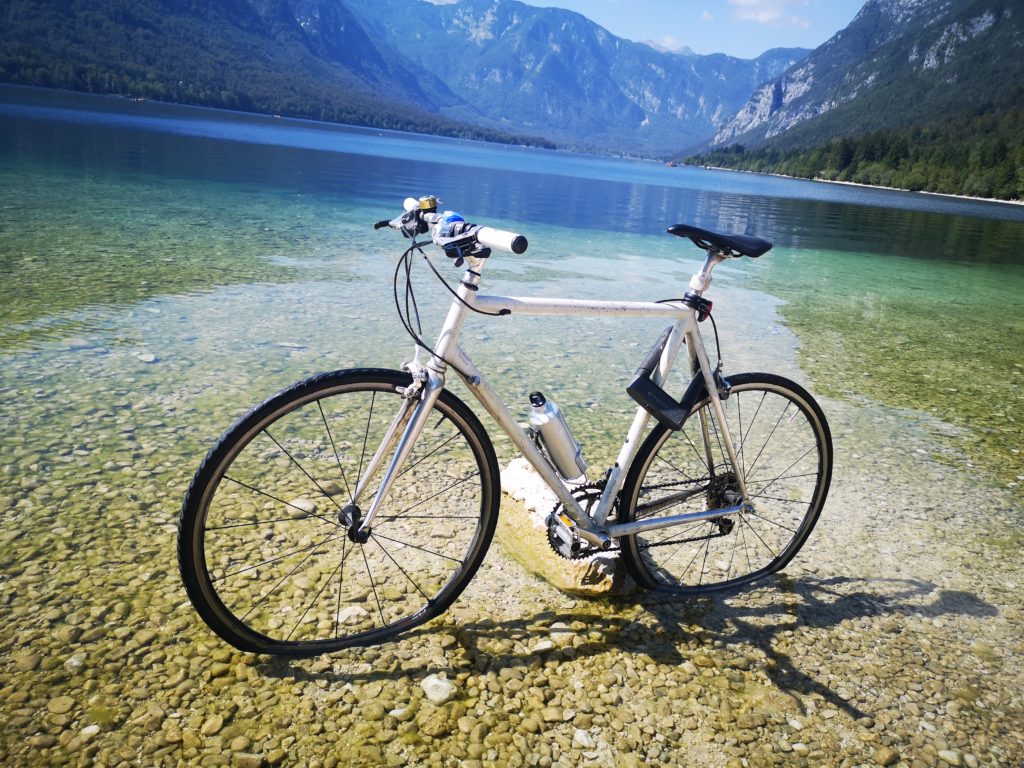
To remember: While I don’t recommend cycling around the lake, I do strongly recommend cycling to Lake Bohinj. Stop a few kilometres before the lake and finish by bike. You can also combine the bus or train with this 7 km one-way cycle route.
Skip the Vogar viewpoint (there’s a better one)
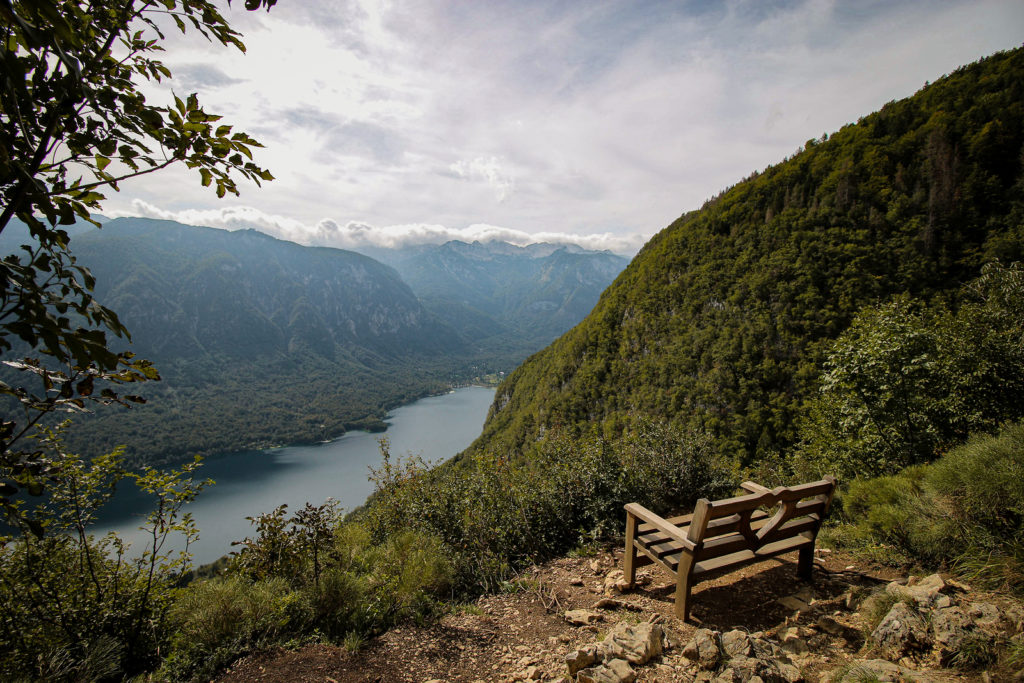
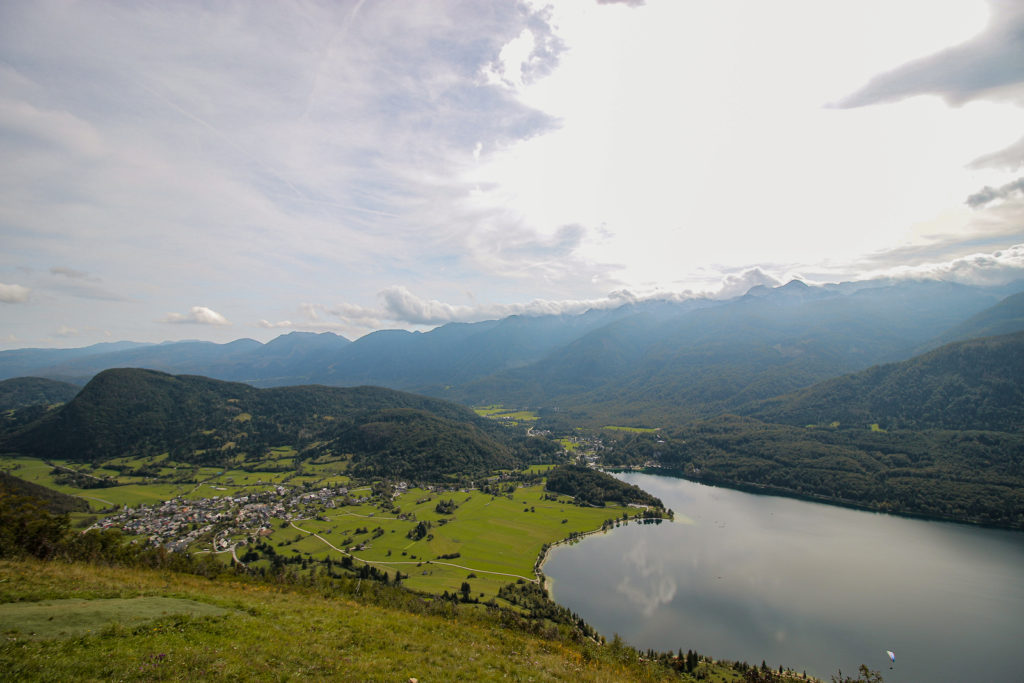
No question about it, the view over Lake Bohinj from the Vogar viewpoint is magnificent. So why not go? The 1 hour 05 minute walk up to the viewpoint is downright strenuous (500 m ascent!). The path is steep, with countless large rocks. On the way up, as on the way down, this path is a real pain!
Instead, climb up to this other secret viewpoint over Lake Bohinj
It’s not worth the effort, especially as you can also get a great view of the whole length of the lake in just over 20 minutes’ walk (Go to Pec, a secret spot).
Note, however, that if you’re looking for a big hike and continue walking after reaching the Vogar viewpoint, this steep ascent is well worth the effort (then reach Pršivec).
Tip: Make use of the very interesting option of taking the bus up to the Planina Blato mountain pastures from the village of Srednja vas. Leave your car in the village. Information here.
Don’t underestimate the travel time to the Soča Valley
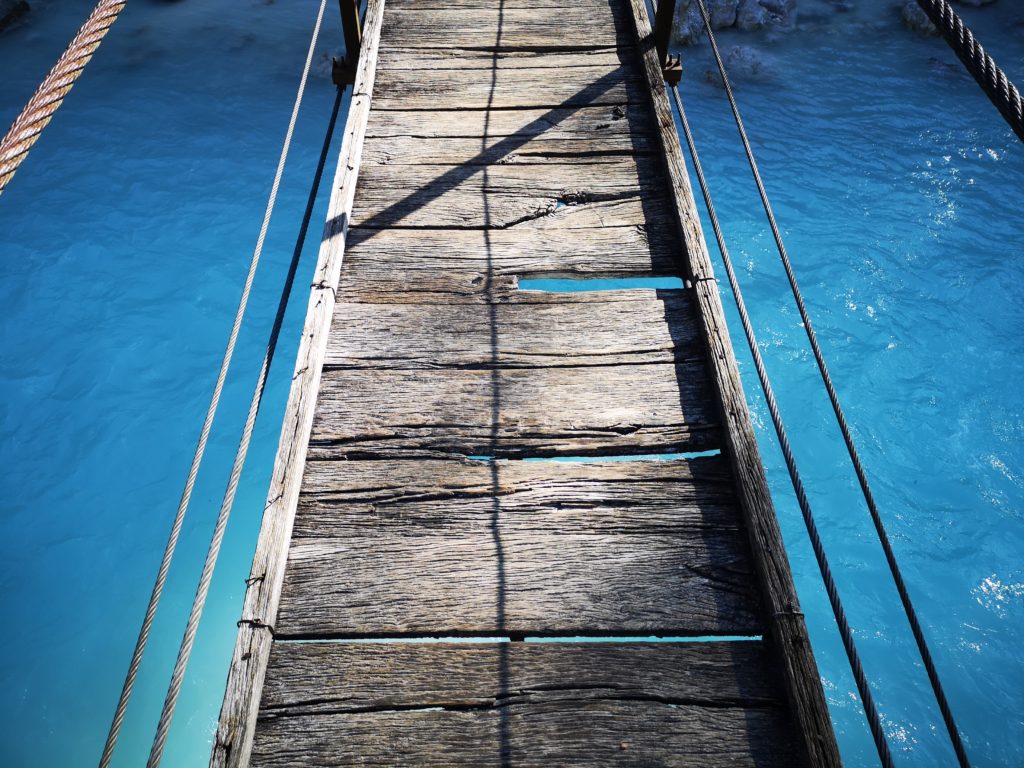
The Soca Valley is one of the most beautiful alpine landscapes in Slovenia. A spectacular emerald-green river flows through the valley, and the area is famous across Europe among white-water sports enthusiasts.
When readers send me their travel plans for Slovenia, I often notice the same idea appearing again and again: they plan to visit Lake Bohinj and the Soča Valley on the same day.
On a map, the two destinations look very close to each other, so the itinerary seems perfectly logical.
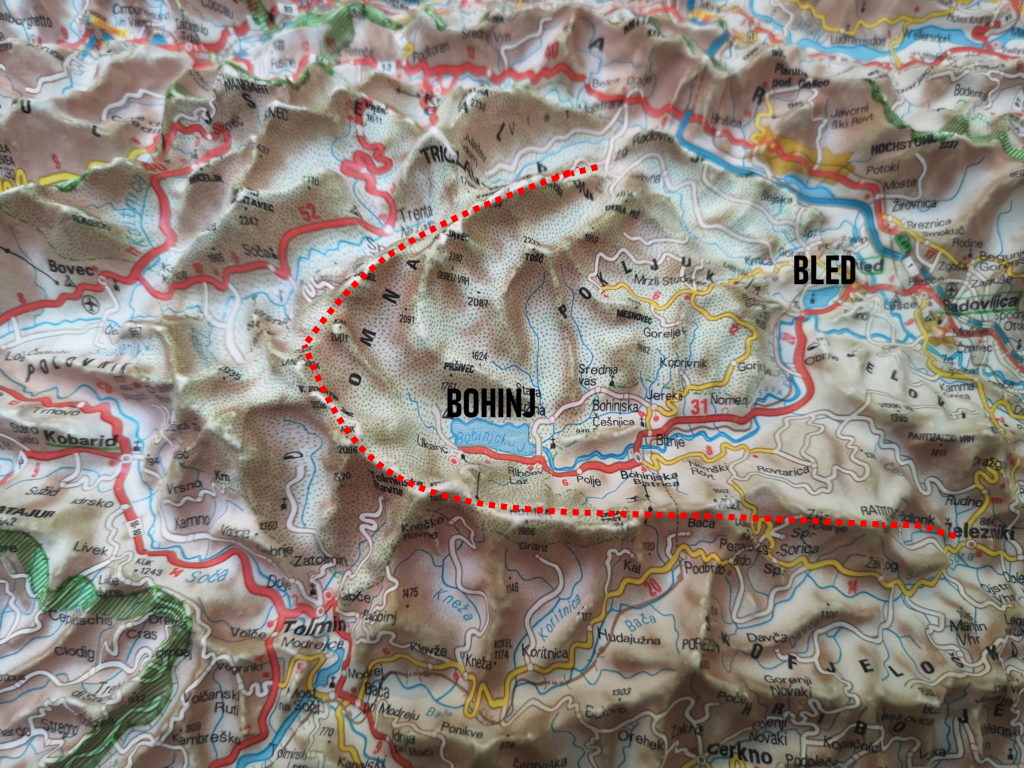
In reality, Slovenia’s geography tells a completely different story. As you can see on a relief map, once you reach Lake Bohinj a high arc of mountains rises between you and the western part of the country. These peaks, many of them over 2,000 metres high, form a natural barrier that separates Bohinj from the Soča Valley and makes the journey much longer than it appears at first glance.
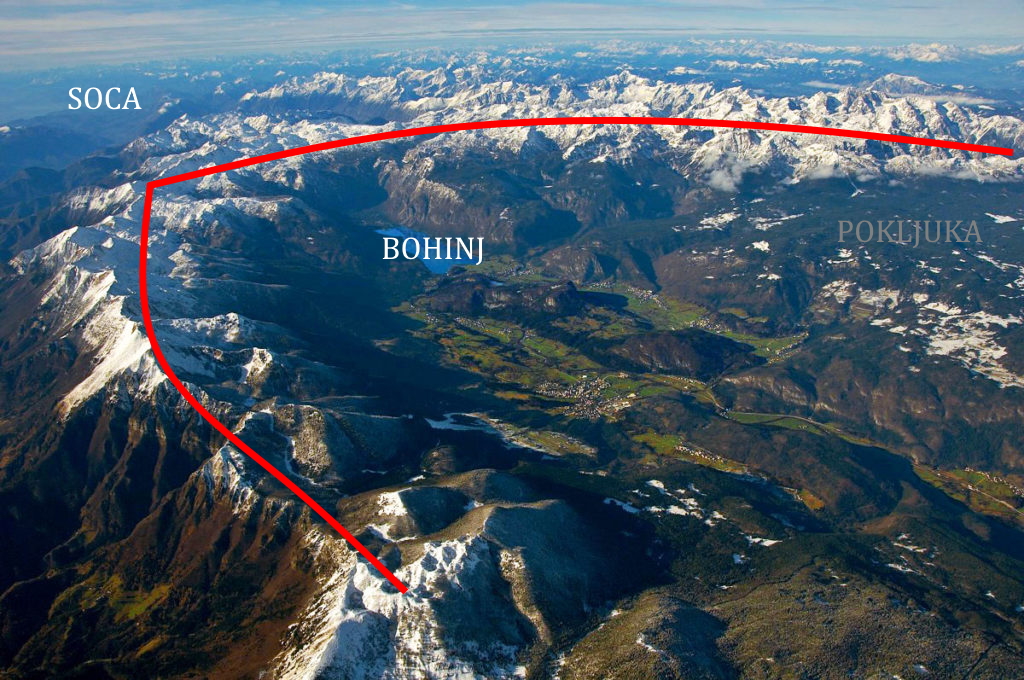
A mountain range over 2,000 metres high separates Lake Bohinj and the Soca Valley
Lake Bohinj lies at an altitude of 526 m. Remember that getting from Bohinj to the Soca Valley takes time. Either take the auto-rail at Bohinjska Bistrica, or a very winding road that passes through the small ski resort of Soriska Planina, or head back towards Bled, then Kranjska Gora and climb over the Vrsic pass. This will take you 2 hours 15 minutes. A particularly pretty route!
Think twice before visiting the Mostnica Gorge
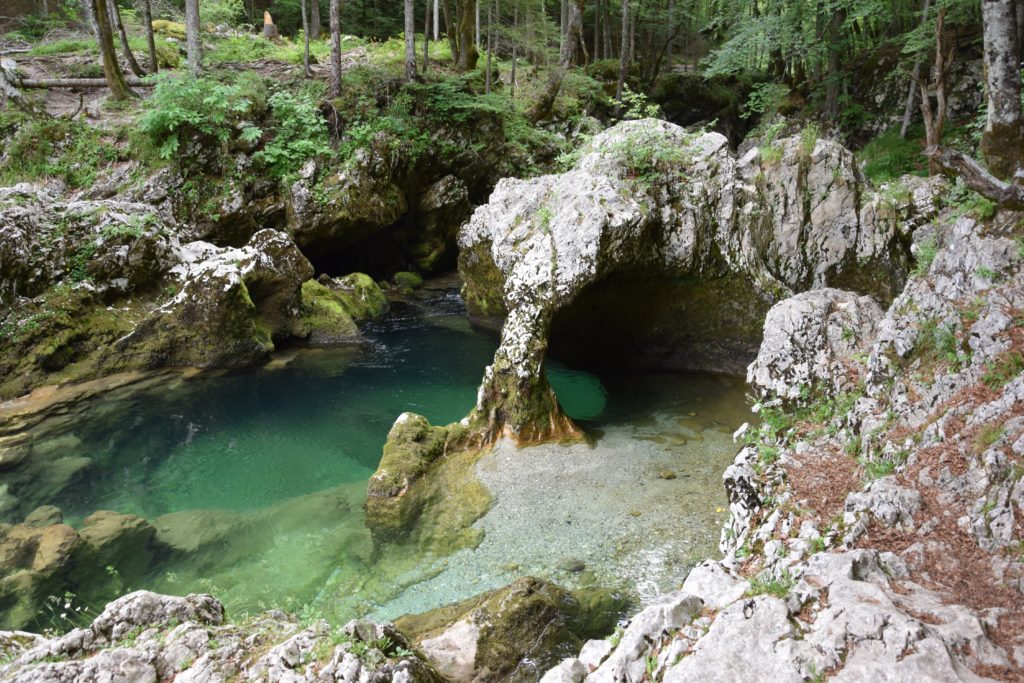
The tourist office also recommends visiting the Mostnica Gorge. The walk begins in the small village of Stara Fužina, just a few minutes from Lake Bohinj.
From there, a forest path follows the course of the gorge. The walk is pleasant and shaded, and from time to time you catch glimpses of the river cutting through the rock below.
The views of the canyon are nice, but they are quite rare along the trail. In reality, the view in the photo above is one of the best perspectives you will get during the whole walk.
At the end of the gorge, you reach a friendly mountain hut where you can stop for a break. The Planinska koča na Vojah serves simple traditional dishes and offers a quiet alpine atmosphere.
If you have never seen a canyon before, you may enjoy this walk. But if you have already explored a few gorges or tried canyoning in the Alps, you might find that the experience is not really worth the two hours of walking and the three-euro entrance fee — especially when you also have to pay for parking nearby.
In short, knowing the lake well, I think there are better things to do in Bohinj than these gorges.
To sum up, even though it’s far from boring and uninteresting, I wouldn’t recommend walking along this canyon if you’re only spending one or two days at the lake. If you’re spending a week at the lake, go for it! I’ve got friends who live in Slovenia who love this place.
Don’t hike to the Voje Valley and the Voje waterfall
I’ve noticed that the Bohinj tourist office is increasingly sending visitors to the Voje Valley and to the waterfall at the very end of the valley. And I admit that when you look at the photos I took there, it’s not immediately obvious why I advise against it. The valley itself is beautiful, with a few traditional alpine houses scattered across the meadows, and the small restaurant at the end serves good Slovenian dishes in a pleasant, authentic atmosphere.
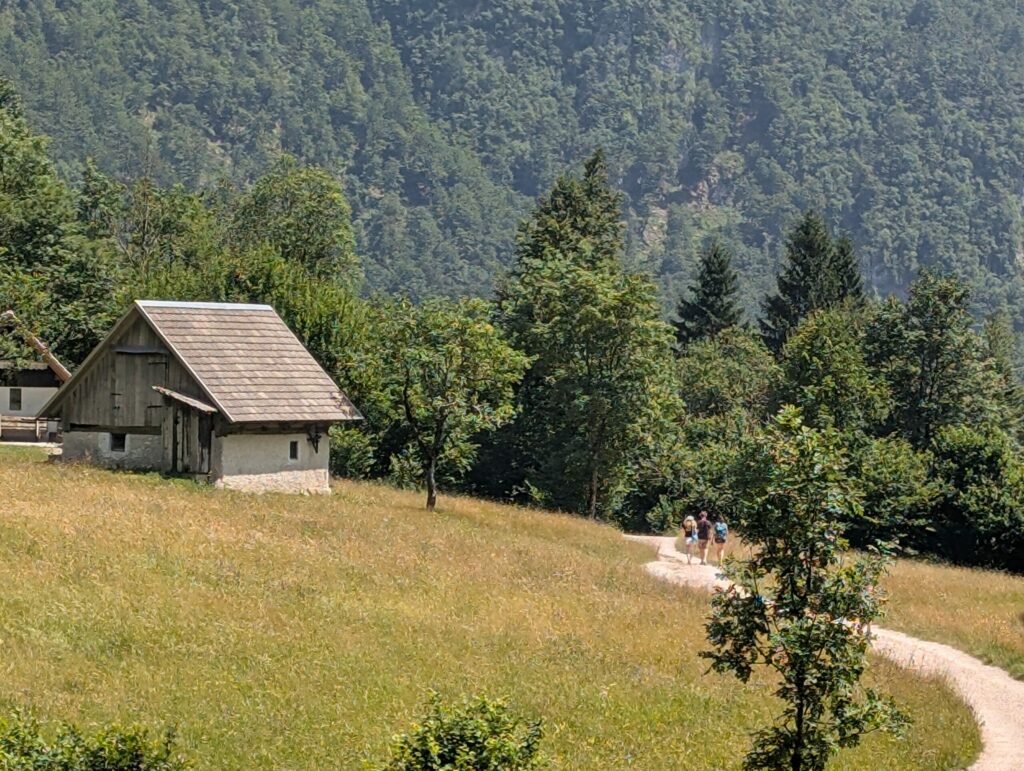
The problem is the access path. The walk is quite long and most of it is exposed to the sun. The track is made of white gravel — the same one you can see in the photo — and on a warm day it can quickly become exhausting because the heat reflects off the stones. The waterfall at the end is pleasant, but it doesn’t compare to the experience you’ll have at Peričnik or in the Gozd Martuljek area, where the scenery is much more impressive.
To reach the Voje waterfall (called Slap Voje in Slovenian), you need about 1 hour and 30 minutes of walking, including roughly 45 minutes under direct sun. The elevation gain is modest — about 145 metres — but the return follows exactly the same rather monotonous track. In my opinion, walking part of the Lake Bohinj shoreline, which I recommend in this guide, is far more enjoyable. And if you’re travelling with teenagers, this kind of walk might easily put them off hiking for the rest of the holiday.
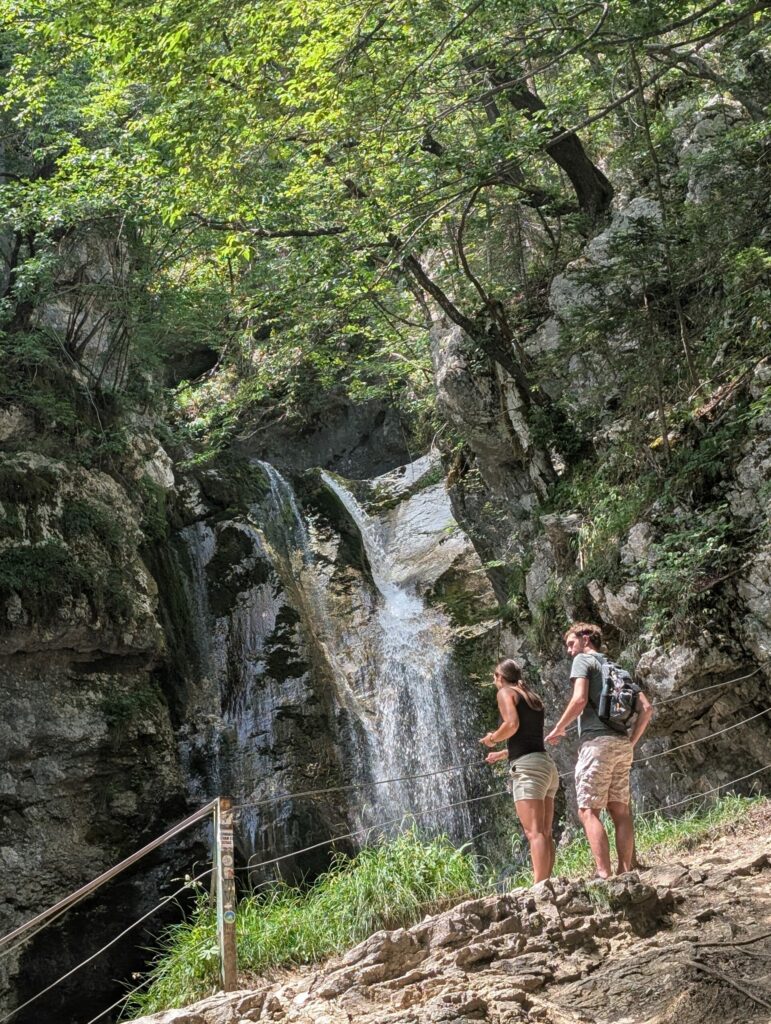
With this kind of very concrete, on-the-ground advice, I can probably save you half a day of your trip. The tourists I met along the path didn’t seem to be having the magical alpine experience they had probably imagined.
That said, Planina Voje is not an ugly place at all, and the restaurant at the end of the valley — Okrepčevalnica Slap Voje, just before the waterfall — is actually very good. But around Lake Bohinj there are simply better walks and more memorable landscapes to discover.
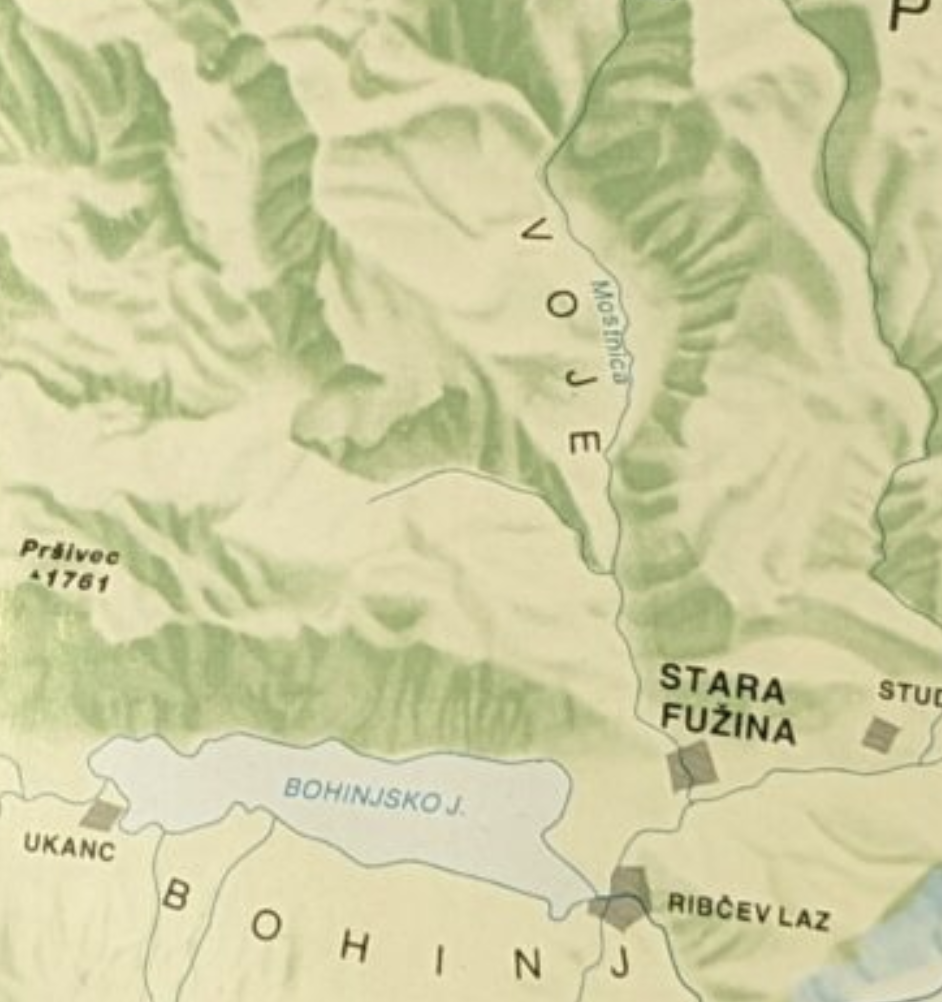
If you want to understand the route, the walk starts in the village of Stara Fužina and follows the Mostnica River upstream into the valley.
If you are staying several days around Lake Bohinj and enjoy walking, the hike can still make sense — especially if you plan a proper stop at the restaurant at the end for lunch or a relaxed afternoon snack.
Don’t come too early in the morning
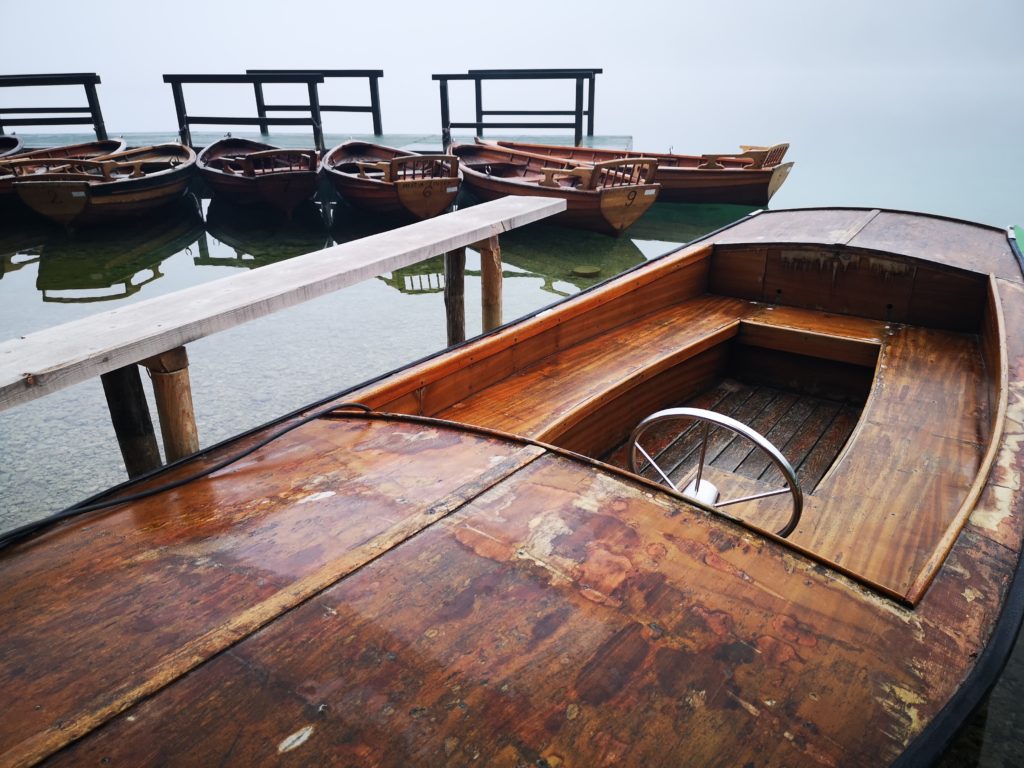
It’s a great idea to get up very early on your holiday to see the sun rise over Lake Bled , but when it comes to Lake Bohinj, that’s not often a good idea. Even on a sunny day, the lake is often shrouded in thick fog.
This thick fog gives Lake Bohinj a Scottish lake feel.
It’s very beautiful and poetic , as you can see from the video I shot on the shores of the lake, but if, like me, you got up at 5am, the four hours spent in the cold and fog before the blue sky broke are a long time. If you want to see this beautiful spectacle, coming at 8.30am should be enough. No need to get up at the crack of dawn! There you have it, this article may have saved you a few hours’ sleep during your holiday.
Tip: You can use this webcam to see if there’s fog on the lake.
8 Useful Tips for Visiting Lake Bohinj
- If possible, cycle to the lake. The road that runs along Lake Bohinj is beautiful, and arriving by bike allows you to avoid the traffic and the parking problems that often occur in summer.
- Swim on the north shore, which is usually much quieter. Most visitors stay near the main village of Ribčev Laz, while the northern side of the lake has many peaceful access points.
- Look for car parks before arriving directly at the lake. In high season the closest parking areas fill up very quickly, so it’s often easier to leave the car a little further away and walk the last few minutes.
- Also take the mountain pastures route. The alpine pastures above Bohinj are one of the most beautiful landscapes in Slovenia, with wooden huts, grazing cows and wide views over the Julian Alps.
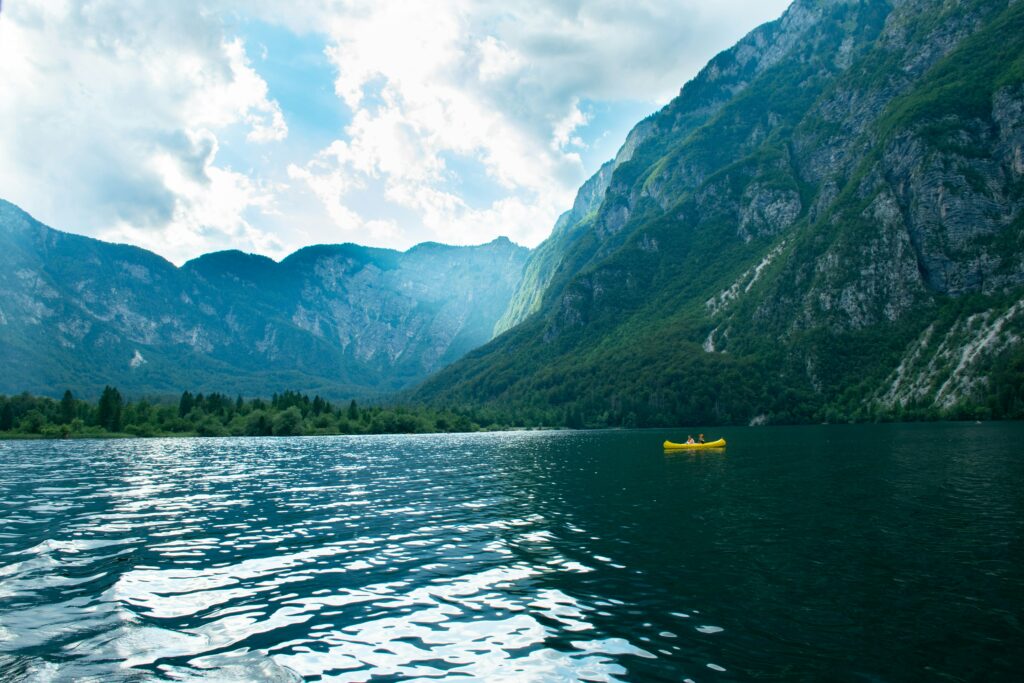
- Hire a canoe about two hours before sunset. At that time the lake becomes much calmer, the light is softer, and you can paddle across the water in a surprisingly peaceful atmosphere.
- Walk up to the Peč viewpoint. The short path starts near Ribčev Laz and leads to a small rocky viewpoint that offers one of the most iconic views over Lake Bohinj.
- Spend a whole day at the lake, not just a few hours. Bohinj is a place that really reveals itself slowly, especially if you take time to swim, walk and simply enjoy the landscape.
- Stay around the lake if you love nature and the mountains. Spending the night here allows you to enjoy Bohinj early in the morning or in the evening, when the crowds disappear and the valley feels completely different.